Do you have an endocrine disease that affects your calcium levels or bones?
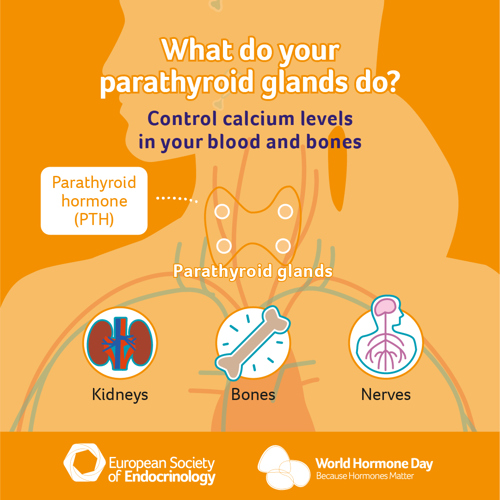
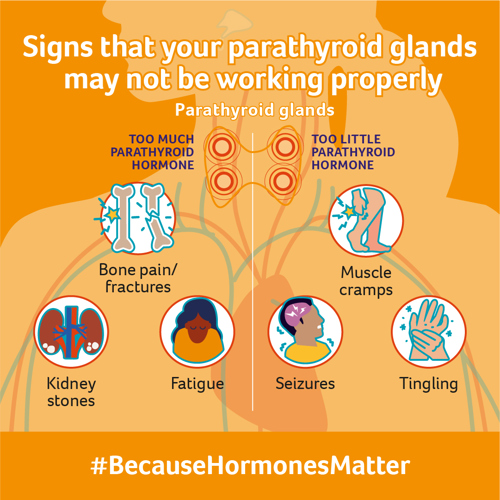
Hormones produced by your parathyroid glands help control calcium levels in your blood and keep your bones healthy. Health problems can occur if these glands do not work properly.
Here you'll find useful resources for people with endocrine conditions that affect calcium and bone health. This includes patient information leaflets, videos, emergency treatment cards and links to patient groups that can offer additional information and support.
Useful resources
- Patient Information Leaflet for hypoparathyroidism
- Patient Information Leaflet for primary hyperparathyroidism
- "Emergency cards" for adult patients with hypoparathyroidism (available in 18 languages)
- ESE Hypoparathyroidism Patient Forum – webinars for patients with hypoparathyroidism
Through PARAT, our educational programme on parathyroid disorders, we publish adapted materials to reflect the latest consensus on diagnosis and treatment. These are intended for clinicians to use with patients, but patients and their families may also find them useful:
- Patient Guide to Hypoparathyroidism (PARAT resource)
- A Patient Parathyroid Disorders Guide During Preconception, Pregnancy and Lactation (PARAT resource)
ESE Corporate Member BridgeBio/Calcilytix has developed ADH1 Patient Information Leaflets in various languages which can be found below (please note these are developed by and property of BridgeBio/Calcilytix and not of ESE):
- ADH1 Patient Information Leaflets: BridgeBio/Calcilytix
- Information about BridgeBio/Calcilytix CALIBRATE Phase 3 Study
The following educational resources may also be helpful:
- Society for Endocrinology – "You and Your Hormones" guides including hypercalcaemia, hypocalcaemia, hypoparathyroidism, hypophosphataemia, primary and tertiary hyperparathyroidism, osteoporosis, Paget's disease and rickets.
Representatives from our calcium and bone patient community hear from expert speaker Jens Bollerslev (Norway) on the Revised ESE Guideline on Hypoparathyroidism. This is followed by a talk from Lucy Weigall from Parathyroid UK, who provides a perspective on what this guideline revision means for patients.
This presentation was first delivered as part of the ESE Hypoparathyroidism Patient Forum in November 2025 and was repeated at the 28th European Congress of Endocrinology (ECE 2026) in Prague, Czechia.
Follow the latest conversations about hormone health by following World Hormone Day on Instagram and Facebook and by using the hashtag #BecauseHormonesMatter
If you'd like to help get more people talking about hormone health, join in on 24 April 2027 when we mark World Hormone Day. This is a chance to raise awareness of what hormones are and the role they play in health and disease. Every voice counts!
