
Do you have a condition that affects how your brain controls hormones?
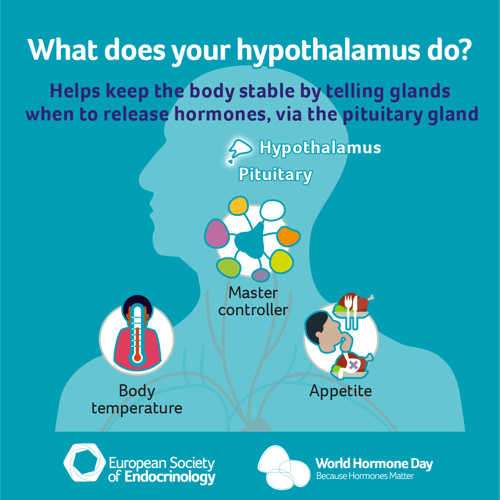
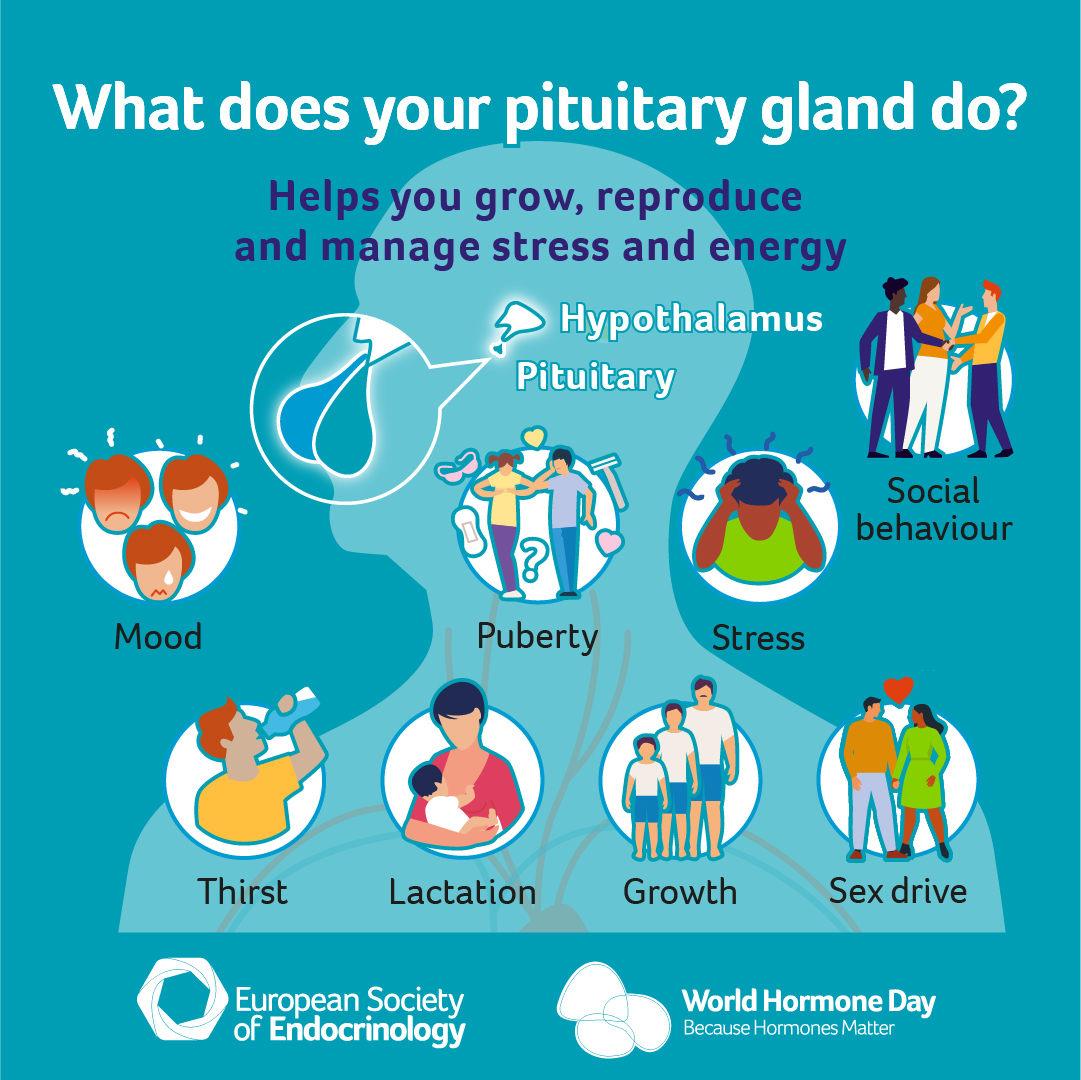
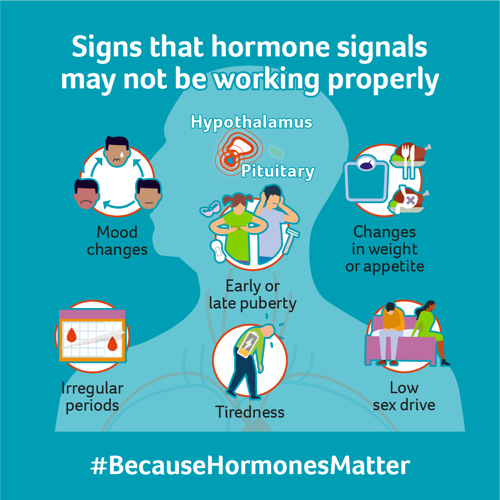
The hypothalamus is often considered the master controller of the endocrine system. Through the pituitary gland, it tells your body when to produce hormones. Your pituitary gland helps you grow, reproduce and manage stress and energy. Health problems can occur if these hormone signals are not working properly.
Here you'll find useful resources for patients and families, including patient information leaflets, videos, emergency treatment cards and links to patient groups that can offer additional information and support.
Useful resources
- Patient Information Leaflet for patients with aggressive pituitary tumours and pituitary carcinomas
- Patient Information Leaflet for women with pituitary adenomas before, during and after pregnancy
- "Emergency cards" for adult patients with arginine vasopressin deficiency / diabetes insipidus (available in eight languages)
The following educational resources may also be helpful:
- Society for Endocrinology – "You and Your Hormones" guides including acromegaly and gigantism, growth hormone deficiency, craniopharyngioma, Cushing’s disease, empty sella syndrome, hypopituitarism (including Sheehan’s syndrome), Nelson’s syndrome, non-functioning pituitary tumours, pituitary apoplexy, prolactinoma, TSH-secreting pituitary adenoma and vasopressin (AVP)-related polyuria (previously known as diabetes insipidus).
- European Society for Paediatric Endocrinology – booklets for children and young people including craniopharyngioma, growth hormone deficiency, multiple pituitary hormone deficiency and more.
Watch the video to learn what the pituitary gland is, what hormones it produces and what happens when it stops working correctly.
Representatives of our pituitary and neuroendocrinolgy patient community join experts Romy van der Groef and Johan de Graaf to discuss patient-driven research to address fatigue and unmet needs in pituitary diseases.
This presentation was delivered at the 28th European Congress of Endocrinology (ECE 2026) in Prague, Czechia.
Follow the latest conversations about hormone health by following World Hormone Day on Instagram and Facebook and by using the hashtag #BecauseHormonesMatter
If you'd like to help get more people talking about hormone health, join in on 24 April 2027 when we mark World Hormone Day. This is a chance to raise awareness of what hormones are and the role they play in health and disease. Every voice counts!
